
Factory: Idle & Tycoon Game
Brightika, Inc.Strategy
4.3367.00 Reviews
- Version
- 1.5.9
- Installs
- 1.00M
- Age Rating
- Everyone
Screenshots
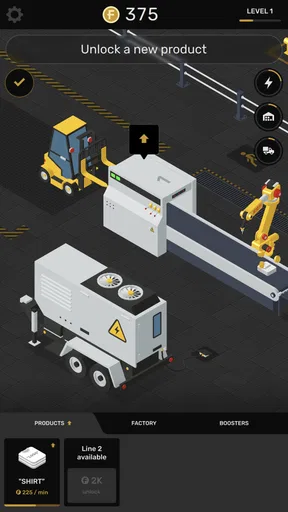
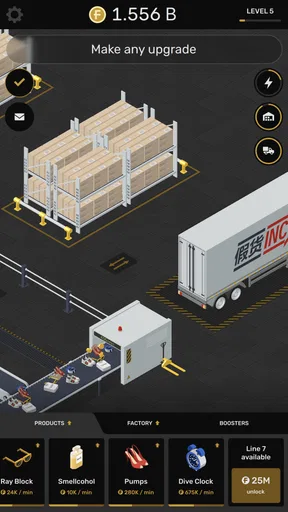
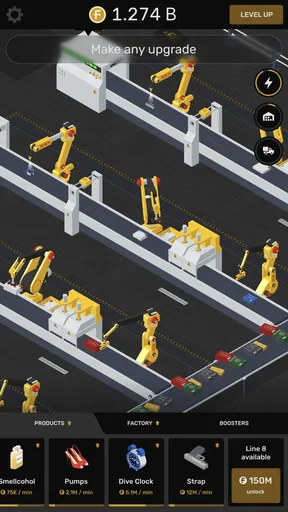
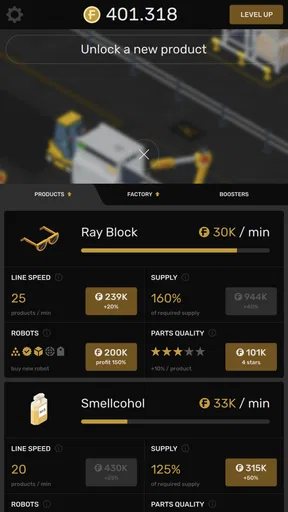
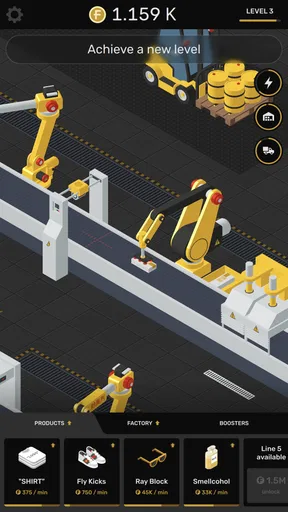
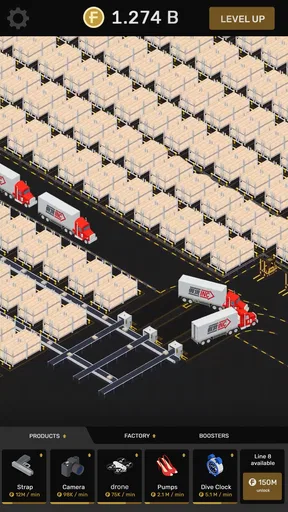
Our Review of Factory: Idle & Tycoon Game
 Analysis by Appyee
I went into Factory: Idle & Tycoon Game expecting a simple production-themed time filler, but I found a strategy game built around a more specific pleasure: turning a small operation into a smoother, more profitable machine. Its central idea is easy to understand. You manage a factory, improve the way it works, and make decisions that gradually turn idle progress into a larger business simulation.
That simplicity is part of its appeal. I could pick it up for a short session, make a few management decisions, and leave it running in the back of my mind until I returned. At the same time, the game asks me to think about priorities rather than merely tap through a checklist. The best results come from deciding what deserves attention first, when an upgrade is worth its cost, and whether immediate progress is better than preparing for a stronger next step.
Brightika, Inc. presents it as a free strategy game for everyone, and that description fits the general experience. It is available for players using Android 9 or later, with optional in-app purchases ranging from $0.99 to $99.99 per item. The game has passed the one-million-install mark and holds a 4.4 average from roughly 9.7 thousand ratings, which suggests that its approachable management loop has found a substantial audience.
How the factory loop feels in everyday play
The first thing I noticed is that the game does not demand that I understand a complicated economic model before I can start. Its factory theme gives every action a visible purpose: production should become more efficient, income should support expansion, and each improvement should help the operation move toward a more capable setup.
That makes it a comfortable choice for short breaks. I can open it while waiting for a meal, review what has accumulated, spend resources on a sensible improvement, and close it again without feeling that I have abandoned a long real-time match. The idle structure is especially useful for players who enjoy the satisfaction of returning to progress rather than needing uninterrupted concentration.
Still, this is not completely passive. If I treat every reward as a reason to buy the most obvious improvement, progress can feel less efficient. The more interesting decisions appear when several upgrades compete for the same resources. One option may improve the immediate flow of the factory, while another may take longer to pay off but create a better foundation for later growth.
The useful mindset is to manage the bottleneck, not simply chase the largest visible number. If production is moving quickly but income or capacity is holding things back, improving production again may be wasteful. I found the game more satisfying when I looked for the part of the operation that was slowing everything else down and directed my next decision there.
Why the idle format works here
Factory management is a natural match for idle design because the theme already suggests processes happening continuously. Instead of making every action depend on constant tapping, the game lets progress build over time. That gives the experience a relaxed rhythm, but it also creates a small planning challenge: I need to decide how to spend what the factory has produced since my previous visit.
This makes it different from a traditional strategy game based on direct competition, map control, or long tactical turns. There is less pressure to react to another human player and more emphasis on shaping a growing system. I would recommend it to someone who likes watching numbers improve and adjusting a plan gradually, rather than someone looking for dramatic battles or deep, immediate tactical surprises.
The trade-off is that the game can feel repetitive if the basic production cycle does not appeal to you. Its enjoyment comes from optimization and accumulation. Players who need a strong story, constant novelty, or a clear end to each session may find the loop too circular. I enjoyed the routine, but I also think it works best when treated as a light management hobby rather than a full replacement for a larger strategy title.
Small decisions that make progress smoother
My most reliable approach was to avoid spending everything as soon as I returned. I first checked what the factory seemed to need, then kept enough flexibility for the next meaningful improvement. This matters because an upgrade that looks attractive in isolation may leave the rest of the operation poorly balanced.
A second useful habit is to compare upgrades by their role, not only by their immediate reward. A direct production improvement is easy to appreciate, but a capacity or efficiency-related choice can sometimes make future returns more dependable. I would not automatically choose one type every time; the point is to ask what problem the factory is currently experiencing.
I also found it helpful to separate “progress that feels good now” from “progress that changes the pace of the whole operation.” The first keeps a session satisfying. The second is what prevents the middle of the game from becoming a series of identical purchases. When I saved toward a more meaningful shift instead of making several minor choices, the factory felt more like something I was managing and less like a reward dispenser.
What the current version means for players
The current version is 1.5.5, so a new player is not approaching an untouched early release. The game originally appeared on July 14, 2022, and its present version gives the experience a more established identity than a newly launched experiment. That matters for anyone deciding whether to invest time: the core concept has had time to settle into its current form.
For an existing player, the practical point is that the current experience should be judged by the balance and flow available now, not by memories of the first release. A version number alone does not tell me that every personal complaint has been solved, but it does mark the game as an ongoing product rather than a one-off launch build. I would approach it with reasonable expectations: the main factory loop is the reason to play, while future changes may refine the experience rather than transform it into a different genre.
I would also avoid assuming that a newer version automatically means a deeper game. The strongest part of this title remains its accessible management structure. If someone wants a highly complex simulation with detailed logistics, labor systems, or a large economic model, the version number should not be mistaken for evidence that it competes directly with those heavier alternatives.
How it compares with other strategy choices
Compared with a classic city-building game, this factory simulator is more focused. I am not primarily laying out a broad settlement, balancing public services, or worrying about a large population. The narrower business setting makes it easier to understand what each decision is supposed to accomplish, and it is better suited to short sessions.
Compared with a competitive strategy game, it is calmer and more forgiving. There is no need to defend a position against another player in the middle of a session, and I can return at my own pace. That is a major advantage for casual players, but it also means the game lacks the tension that comes from an opponent actively disrupting a plan.
Compared with other idle games, the factory theme gives the progression a more concrete shape. I am not merely watching an abstract currency rise; I am thinking in terms of a business operation and its development. However, players who already enjoy a different idle game may find the underlying rhythm familiar. The deciding factor is whether the production setting makes that rhythm more engaging for you.
For me, the best alternative depends on the kind of decision I want. I would choose this game over a competitive title when I want low-pressure progress. I would choose a deeper simulation when I want to model a complicated economy. I would choose a story-led game when I want characters and narrative to carry the session. Factory: Idle & Tycoon Game occupies the middle ground: more purposeful than a purely passive clicker, but lighter than a serious management simulator.
Where the experience can become frustrating
The same idle design that makes the game convenient can also weaken the sense of urgency. Once I understood the basic rhythm, some returns felt like maintenance rather than discovery. The enjoyment depends on continuing to find a better use for resources, and that may become less compelling for players who prefer constant new mechanics.
There is also a natural temptation to spend money when progress slows. The game is free to download, but its purchase range reaches from $0.99 to $99.99 per item. I would advise treating purchases as optional conveniences rather than part of the basic strategy. Before paying, I would ask whether the purchase solves a genuine annoyance or simply encourages me to skip the planning that makes the game interesting.
This is especially important for younger players. The content rating is Everyone, which makes the game broadly accessible, but an all-ages rating does not remove the need for sensible purchase controls on a shared device. I would set a clear spending rule before handing the phone to a child or family member, because the presence of optional purchases can change how a relaxed idle game feels in practice.
Another limitation is that the game may not satisfy someone who wants complete control over every production detail. Its appeal comes from making understandable, high-level business choices. If you want to design every route, inspect every worker, or tune a highly granular supply chain, you may find the available management layer too light. That is not a flaw for its intended audience, but it is a meaningful boundary.
Practical ways to get more from each session
I recommend beginning each visit with a quick review rather than immediately collecting and spending. Notice what has changed since the last session, identify the slowest part of the operation, and decide whether the next purchase improves that weakness. This simple pause turns the game from automatic claiming into a small planning exercise.
For short daily sessions, I would prioritize choices that make the factory easier to maintain. A slightly less exciting improvement can be valuable if it reduces the need to return constantly for minor corrections. For longer sessions, I would use the time to compare several possible directions and save toward the option that changes the pace of progress rather than merely decorating the current one.
A useful experiment is to play for a while without spending on every available improvement. This reveals whether your progress is limited by production, resources, or another part of the loop. It also helps you understand the cost of impatience. If the game feels better when you plan purchases, you have found the strategic layer that separates it from mindless tapping.
I would also keep expectations realistic after an especially strong return. A large reward can make several upgrades look affordable at once, but spending the entire amount may leave the next cycle weaker. I preferred leaving a reserve and making one deliberate improvement, particularly when I was unsure which part of the factory would become the next bottleneck.
Who should play it and who should skip it
I think this is a good fit for players who enjoy incremental growth, business themes, and games that respect interrupted play. It works well for someone who wants a strategy-flavored app during commutes, breaks, or quiet evenings, especially if that person likes returning to see how a system has developed.
It is also suitable for newcomers to management games. The factory setting gives the decisions an intuitive context, and the idle structure reduces the fear of falling behind after a missed session. You do not need to approach it like a competitive tournament. A patient player can learn the rhythm by observing which improvements make the operation healthier over time.
I would skip it if you need a strong narrative, direct player-versus-player tension, or a simulation with extensive control over every business variable. I would also be cautious if you dislike repeated upgrade loops or feel pressured by optional purchases. In those cases, a premium strategy game with a fixed structure may be a better match, even if it offers less casual convenience.
Families should find the Everyone rating reassuring from a content perspective, but I would still supervise spending and explain that faster progress is not the same as better strategy. The game is most rewarding when the player understands why an upgrade helps, not when every obstacle is removed immediately.
What I would watch as the game continues
The most important future question is whether the factory loop can keep offering meaningful decisions without losing its approachable character. More complexity would not automatically be better. If new layers arrive, they should clarify the business choices rather than bury the simple satisfaction of improving production.
I would also watch how the balance handles players who do not purchase extras. A free strategy game can remain enjoyable when optional spending is genuinely optional, but the feeling of progress matters. The best long-term experience is one where planning still has value and purchases do not become the only comfortable route through slower sections.
For returning players, the current version offers a sensible point to reassess the game. If you left because the early loop felt too basic, it is worth seeing whether the present build now fits your preferred pace. If you already enjoy the factory routine, the main reason to return is the pleasure of refining your operation, not the expectation of a completely different game.
My final view is positive but measured. Factory: Idle & Tycoon Game is a pleasant strategy title for people who like gradual business growth, short sessions, and decisions that improve a self-running operation. Its strongest quality is the way it turns ordinary idle progress into a reason to think about priorities. Its weakest point is that the same loop can become repetitive, particularly for players seeking deeper simulation or constant surprise.
I would recommend trying it when you want a low-pressure factory game that can fit around your day. Start slowly, watch for bottlenecks, resist spending resources without a purpose, and treat purchases as optional rather than necessary. It is at its best when you play the manager, not just the collector—making a few thoughtful choices and letting the factory show you whether they worked.
Privacy and Permissions
See what permissions an app requests and how it handles your data.
- Wi-Fi connection information
- view Wi-Fi connections
- Other
- view network connections, full network access, control vibration, prevent device from sleeping, Google Play license check
Verdict
Strengths of Factory: Idle & Tycoon Game
- Simple production chains are easy to understand and expand.
- Offline progress lets factories keep earning while you are away.
- Many machines and upgrades provide steady long-term goals.
- Relaxed gameplay works well for short sessions or casual play.
- Clean visuals make factory layouts easy to read on small screens.
Limitations of Factory: Idle & Tycoon Game
- Progress can become slow without watching ads or spending resources.
- Limited interaction may feel repetitive after the initial expansion phase.
- Large factories can make menus and production details feel cluttered.
- Some upgrades require considerable waiting before their benefits appear.
- The game may use noticeable battery power during extended idle sessions.
Other Releases by Brightika, Inc.
View All

Save the Bro 2
Adventure4.3
Similar Picks in This Category
View All
Clash of Clans
Supercell4.5

Plants vs. Zombies™
ELECTRONIC ARTS3.7

Lords Mobile: Kingdom Wars
IGG.COM4.5

Clash Royale
Supercell4.4

State.io — Conquer the World
CASUAL AZUR GAMES4.1

Car Driving School : Car Games
Spark Game Studios3.9
Frequently Asked Questions
What is Factory: Idle & Tycoon Game about?
Factory: Idle & Tycoon Game is a management and simulation game focused on building and expanding an automated industrial business. You begin with a small production setup, then unlock machines, improve workflows, hire or manage resources, and increase your income over time. The main appeal is watching your factory grow while making strategic decisions about upgrades, production speed, storage, and profits.
Can I play Factory: Idle & Tycoon Game offline?
The game may allow some idle production and basic management while you are not actively playing, but certain features can depend on an internet connection. Online access may be required for advertisements, cloud synchronization, special events, purchases, or updated content. Before downloading, check the current store description and test the game on your device if offline access is important to you.
Does Factory: Idle & Tycoon Game contain ads or in-app purchases?
As with many free-to-play idle tycoon games, Factory: Idle & Tycoon Game may include optional advertisements and in-app purchases. Ads can sometimes provide bonuses such as extra currency, faster production, or temporary boosts, while purchases may remove waiting times or speed up progress. You can usually play without spending money, although progression may feel slower.
Is Factory: Idle & Tycoon Game suitable for beginners?
Yes, the game is generally approachable for beginners because its core mechanics are introduced gradually. Early objectives explain how to place production equipment, collect earnings, and improve factory efficiency. However, later stages require more planning, especially when balancing resources, production chains, storage capacity, and upgrade costs. Players who enjoy incremental progress should find the learning curve comfortable.
What devices are compatible with Factory: Idle & Tycoon Game?
Compatibility depends on the version available for your platform, as well as your device’s operating system, processor, memory, and available storage. Before installing Factory: Idle & Tycoon Game, review the requirements listed on the official Google Play Store or Apple App Store page. Keeping your operating system updated can also help prevent crashes, loading problems, or performance issues.
Play our best games!


